
How to Finance a Custom Home Build in Anderson, SC: Construction Loans Explained
Financing a custom home works nothing like buying an existing house. When you purchase a home that already stands, a lender can appraise it, approve your mortgage, and hand over the keys. But when you are building from the ground up in Anderson, South Carolina, there is no finished home to lend against yet. That single difference changes everything about how the money works, and it is why so many first-time builders feel confused when they start talking to lenders.
The good news is that construction financing is well established and easier to navigate once you understand the moving parts. This guide explains how construction loans work, the main types available, what lenders expect from you, and how to move from pre-approval to a fully funded custom home build without the process stalling your project.
Why Building Requires a Different Kind of Loan
A traditional mortgage is a long-term loan secured by a completed property. A construction loan is a short-term loan that funds the building process itself. Instead of receiving a single lump sum at closing, the money is released gradually as your home is built, and you typically pay interest only on the portion that has actually been drawn.
This structure protects both you and the lender. You are not paying interest on the full loan amount before your home exists, and the lender is not exposing a large sum against a house that is still just a set of plans. Once construction is complete, the loan either converts into a permanent mortgage or is paid off by a separate one, depending on the product you choose.
The Two Main Types of Construction Loans
Most builders in Anderson will work with clients using one of two financing structures, and knowing the difference helps you choose the right fit.
A construction-to-permanent loan, sometimes called a one-time-close loan, combines both stages into a single product. The lender funds the build, and when the home is finished, the loan automatically converts into a standard mortgage. You go through one closing, one set of closing costs, and you can lock your permanent interest rate near the start. This simplicity makes it a popular choice, though it usually requires a down payment in the range of 20 to 30 percent and stricter approval, including verification of your builder.
A stand-alone construction loan covers only the building phase. When construction finishes, you take out a separate permanent mortgage to pay off the construction loan. This path gives you flexibility to shop for the best mortgage rate later, but it means two closings, two sets of closing costs, and some uncertainty about where interest rates will land by the time your home is complete.
How the Money Reaches Your Builder
One of the most important concepts in construction financing is the draw schedule. Rather than releasing all the funds at once, the lender disburses money in stages called draws, each tied to a specific milestone such as the foundation, framing, roofing, and final finishes.
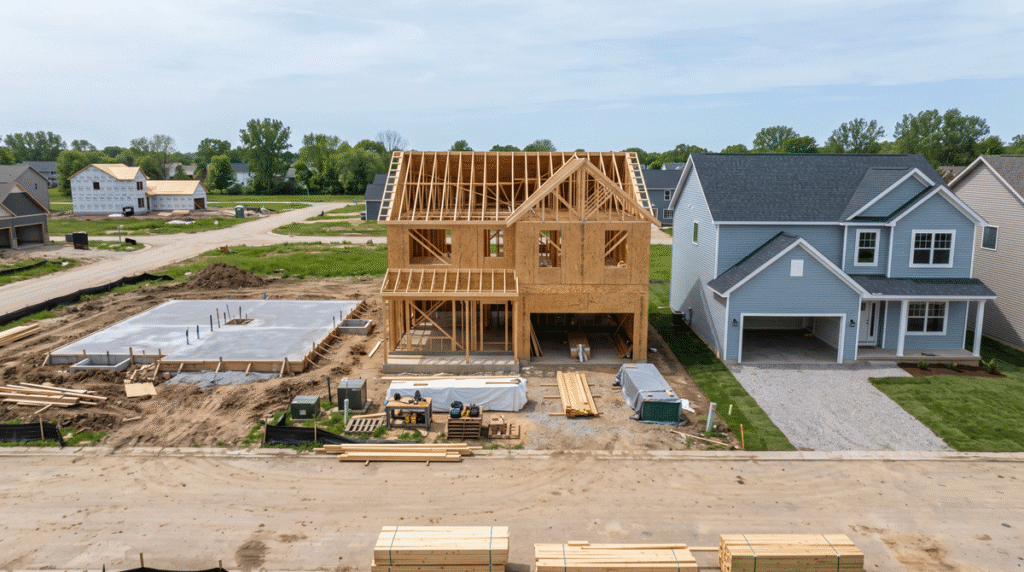
Before each draw is released, the lender usually orders an inspection to confirm that the work has actually been completed. Once the milestone is verified, the funds are released so your builder can pay for the next phase. This cycle repeats until the home is finished. Working with a builder who understands the draw process and keeps clear documentation is a real advantage here, because delays in inspections or paperwork can slow the entire project. A structured building process that maps cleanly to standard draw milestones keeps the money flowing and the schedule on track.
What Lenders Expect From You
Because a construction loan carries more risk than a standard mortgage, qualifying involves more scrutiny. Lenders want confidence in three things: you, your plan, and your builder.
For you, expect to provide the usual financial documentation, including proof of stable income, tax returns, and a solid credit history. For your plan, lenders require detailed construction documents, a complete budget, and a realistic timeline, because they are effectively lending against a project rather than a finished asset. For your builder, the lender will often verify experience, licensing, and reliability before approving the loan. A builder with a strong track record and organized documentation can make this step far smoother.
Down payment expectations are also higher than most people assume. While some conventional mortgages allow as little as 3 to 5 percent down, construction loans commonly require 20 to 30 percent, though certain programs offer lower options depending on your qualifications and lender.
Paying for the Loan During Construction
During the building phase, most construction loans charge interest only, and only on the funds that have been drawn so far. In practice, this means your payments start small and grow as more of the loan is released with each milestone. You are not making principal payments during this period, which keeps your monthly obligations manageable while you are potentially still paying rent or an existing mortgage.
When the home is finished, a construction-to-permanent loan converts to a regular mortgage with principal and interest payments. In contrast, a stand-alone loan is replaced by your new permanent mortgage. Understanding this shift ahead of time helps you plan your household budget for the transition from building to living in your new home.
Steps to Get Financing in Place
Getting your financing organized early prevents costly delays once you are ready to build. Start by reviewing your credit and gathering your financial documents, so you know where you stand. Next, seek pre-approval from a lender experienced with construction loans, since not every bank offers them and those that do vary widely in terms and service.
From there, choosing your builder and finalizing your plans and budget allows the lender to complete underwriting, because they need those details to approve the loan. Selecting a builder who is comfortable coordinating with lenders and who serves your area well is a meaningful advantage. Our team regularly works with financing partners and homeowners throughout Anderson and the surrounding Upstate, and that familiarity keeps the approval and draw process moving.
Financing Mistakes That Cost Anderson Builders Money
A few avoidable missteps trip up first-time builders again and again. The first is underestimating the down payment and closing costs, then scrambling when the lender asks for far more cash up front than a standard mortgage would. The second is choosing a lender with no construction-loan experience, which often leads to slow draws and frustrating paperwork that stall your build.
Another common error is finalizing a budget with no contingency built in. Lenders and builders both recommend setting aside a cushion for the surprises that come with any construction project, because a loan approved with no room to move leaves you exposed if costs shift. Finally, some homeowners lock a permanent rate too early or too late without understanding their loan structure. Knowing whether you hold a one-time-close or a stand-alone loan tells you exactly when your rate is set, so you can plan around it rather than react to it.
Bring Your Financing and Your Builder Together
Financing a custom home in Anderson, SC comes down to understanding a short-term loan that funds your build in stages, choosing between a one-time-close or a stand-alone structure, and preparing your finances and plans so a lender can say yes with confidence. When you know how draws, down payments, and interest-only payments work, the whole process feels far less intimidating.
The smoothest builds happen when your lender and your builder are aligned from the very beginning. At Caba Homes, we help homeowners navigate the construction financing process and coordinate seamlessly with lenders so your draws stay on schedule and your project keeps moving. Explore our portfolio of completed homes to picture what is possible, then contact our team to start planning a build that fits both your vision and your budget.
Frequently Asked Questions
What credit score do I need for a construction loan in South Carolina?
Requirements vary by lender, but most construction loans call for a stronger credit profile than a standard mortgage because the loan carries more risk. A healthy credit history, stable income, and low existing debt all improve your chances of approval and can help you secure better terms.
How much down payment do I need to build a custom home?
Construction loans typically require 20 to 30 percent down, which is higher than the 3 to 5 percent some conventional mortgages allow. Some programs offer lower down payment options depending on your qualifications, so it is worth speaking with a lender who specializes in construction financing.
Do I pay a mortgage while my home is being built?
During construction, you usually make interest-only payments, and only on the funds that have been drawn so far. Full principal and interest payments begin once the home is complete and the loan converts to or is replaced by a permanent mortgage.
What is the difference between a construction-to-permanent loan and a stand-alone construction loan?
A construction-to-permanent loan combines building and mortgage into one product with a single closing, while a stand-alone loan covers only construction and requires a separate mortgage afterward. The first offers simplicity and rate certainty, while the second offers flexibility to shop for a mortgage later.
